
Pelvic floor rehabilitation is essential, yet still too often overlooked. This group of muscles directly affects your everyday comfort, posture, continence… and even your intimate life. Whether you're postpartum, athletic, or simply mindful of your well-being, understanding and strengthening your pelvic floor can truly make a difference. I’ll explain exactly how it works, why it weakens, and how to tone it effectively.

What is the perineum?
The perineum, also called the pelvic floor, is an anatomical region located at the bottom of the pelvis between the pubic bone and the coccyx. It consists of a group of muscles, connective tissues, and ligaments that support the internal pelvic organs.
In women, it plays a key role during pregnancy, childbirth, and everyday life. It supports the uterus, bladder, and rectum while also directly contributing to intimate sensations. In practical terms, the pelvic floor forms a muscular hammock that prevents the organs from descending under the effects of gravity and abdominal pressure (coughing, laughing, physical exertion, etc.).
In men, it supports the prostate and plays a role in urinary and erectile function. A toned pelvic floor contributes to better control over ejaculation and may even help with premature ejaculation or mild erectile difficulties.
The pelvic floor consists of three muscle layers that work together: a superficial layer (linked to external sensations), an intermediate layer (which provides support), and a deep layer (the strongest, essential for continence and keeping the organs in place). Rehabilitating your pelvic floor therefore means working these three layers in synergy, not simply “squeezing.”
For a complete exploration of this area, I recommend the complete pelvic floor guide, which explains its anatomy and role throughout life.
Why rehabilitate your pelvic floor?
A toned pelvic floor helps keep the organs in place and ensures good continence. It's a bit like the foundation of the pelvis: when it weakens, the entire balance above it is disrupted.
Pelvic floor rehabilitation helps to:
- Reduce urinary leakage, which is common after childbirth or during menopause
- Prevent pelvic organ prolapse, which can affect the bladder, uterus, or rectum
- Improve everyday comfort, particularly during physical exertion, sneezing, or lifting heavy loads
- Enhance sensations during sex, both for you and your partner
- Preserve sexual health in the long term, particularly as you age
- Support overall posture, since the pelvic floor works in coordination with the back and abdominal muscles
Over time, hormonal changes, sports, or pregnancies can cause these muscles to lose tone. Working them helps restore better control. Pelvic floor rehabilitation reduces urinary leakage in most women; its effectiveness is recognized, and it is covered by health insurance (see the Sources box).
When should you undergo pelvic floor rehabilitation?

After childbirth, the pelvic floor is stretched and weakened. Rehabilitation is strongly recommended, generally starting 6 to 8 weeks after the birth, once healing is well underway. In France, it is even 100% covered by health insurance, with a prescription from a midwife or doctor (generally around ten sessions): take advantage of this entitlement—many women forget about it or put it off.
For women postpartum, the article postpartum guide covers every aspect of this period, including gradually getting back into shape and resuming sexual activity.
But that's not the only situation:
- Hormonal changes (menopause): declining estrogen levels weaken the tissues and can lead to progressive pelvic floor weakness
- Intense sports: running, CrossFit, and high-impact sports exert regular pressure that can strain the pelvic floor
- Lifting heavy loads: a reflex to develop — exhale while lifting to reduce intra-abdominal pressure
- Urinary problems: stress incontinence, frequent urges, feelings of pressure in the lower abdomen
- Preparing for pregnancy: a well-prepared pelvic floor recovers better after childbirth
- For men: after prostate surgery, or in cases of ejaculation or erection problems
Pelvic floor rehabilitation is therefore relevant for all women, and for men in some cases as well. For menopause in particular, I also recommend the article on menopause and sexuality, which details the changes to anticipate.
The role of the pelvic floor in sexuality

The pelvic floor is directly connected to intimate sensations. This is probably one of the most underestimated benefits of rehabilitation: many women rediscover their sexuality after consistently working on their pelvic floor.
In women, its contractions tighten the vaginal opening, intensifying sensations—for both her and her partner. A toned pelvic floor also makes orgasms more intense, because it is precisely the pelvic floor muscles that contract rhythmically at the peak of pleasure. The more toned these muscles are, the stronger and longer-lasting orgasmic contractions become.
In men, it helps maintain an erection and control ejaculation. A strong pelvic floor can notably help delay ejaculation by exerting conscious control at the right moment. This is one of the reasons Kegel exercises are often recommended for men who want to improve their sexual stamina.
According to a landmark American survey (Herbenick et al., 2018), a large proportion of women report needing clitoral stimulation to reach orgasm, or experiencing a better-quality orgasm when it is present during penetration; a toned pelvic floor also improves the overall quality of sensations. Penetration alone becomes more satisfying when the internal muscles respond better, and blended orgasm (clitoris + vagina) becomes more accessible.
Where should you start pelvic floor rehabilitation?
The first step is to consult a professional: a midwife or a physiotherapist specializing in pelvic floor rehabilitation. This consultation is essential to avoid two common pitfalls. On the one hand, some women already have an overly contracted pelvic floor (hypertonic)—in this case, doing Kegel exercises will only make the problem worse. On the other hand, an assessment makes it possible to pinpoint the areas that need strengthening.
The healthcare professional will be able to assess:
- Muscle tone (too weak, normal, excessive)
- The coordination between the different muscle layers
- The \
- The \
- The \
Then, several techniques are available and can be combined according to your profile.
Kegel exercises
They involve contracting and then relaxing the pelvic floor muscles without engaging the abdominal or gluteal muscles. To locate them correctly, imagine that you are holding back the urge to urinate or pass gas. These are exactly the muscles you need to work.
It is recommended to do 10 to 15 repetitions several times a day. Each contraction lasts 3 to 5 seconds, followed by a relaxation of the same duration. Consistency matters much more than intensity: 5 minutes a day for 3 months is better than an exhausting session once a week.
Breathing exercises
The \
This technique is widely used postpartum because it creates no downward pressure on the organs, unlike traditional abdominal exercises, which can worsen pelvic organ prolapse.
Electrical stimulation
Some professionals offer electrical stimulation therapy, using a probe that electrically stimulates the muscles. This is particularly useful when the pelvic floor is so weakened that you cannot consciously contract it. It helps "wake up" the muscles before moving on to active exercises.
How can you practice pelvic floor rehabilitation on your own?
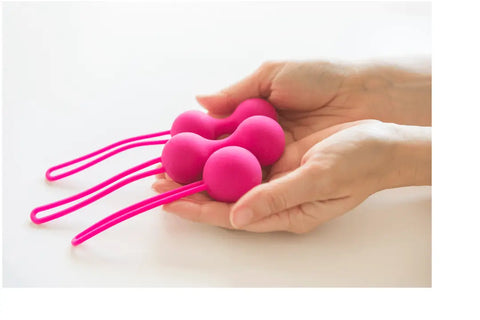
Once you have established the basics with a professional, you can continue your training at home with several tools. The advantage of practicing independently is consistency: a few minutes a day are worth more than all the occasional sessions in the world.
\
To get started: begin with lightweight balls (30 to 60 grams), with a medium diameter (3.5 cm). You can gradually increase the weight and reduce the diameter (more demanding) over the weeks. Vibrating Ben Wa balls add stimulation that makes the exercise more engaging and enjoyable.
Connected kegel balls offer app-guided exercises. You can see the strength of your contraction and how long you hold it in real time, while following a progressive program over several weeks. This is probably the most fun and motivating method for staying consistent over time. To find out more about these specific tools, my article on yoni eggs for pelvic floor rehabilitation explains how they work and their benefits.

Kegel exercises gradually strengthen the muscles. You can do them almost anywhere: on public transport, at the office, or in front of the TV. No one can see you doing them, which is their greatest advantage. A tip to avoid forgetting: associate them with a routine action (at every red light, during every TV commercial, every time you brush your teeth). After a few weeks, it becomes automatic.
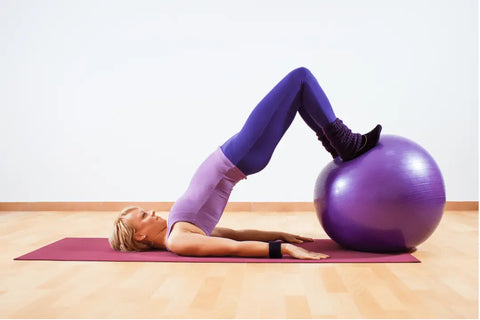
Pilates perfectly complements this work through breathing. This method systematically engages the "core," which includes the pelvic floor. Postural yoga, particularly standing poses and gentle forward bends, also activates the deep pelvic floor muscles. Choose suitable classes, ideally with an instructor trained in postpartum care or women's health.
Mistakes to avoid
Many people make these mistakes, often without realizing it. Correcting them dramatically improves the effectiveness of rehabilitation:
- Contracting your abs instead of your pelvic floor: this is the most common mistake. If your stomach moves or hardens, you are engaging the wrong muscles
- Squeezing your buttocks: another classic compensation, to be avoided at all costs
- Holding your breath: the opposite of what you should do. Always exhale during exertion
- Using too much force: the pelvic floor should be worked with precision, not brute force
- Not being consistent: 5 minutes a day are far better than one long session a week
- Stopping too soon: the first results appear after 4–6 weeks, with real benefits after 3 months
- Practicing without a prior assessment: if your pelvic floor is hypertonic, you will make the problem worse
The pelvic floor should be worked with precision, not force. That is probably the key takeaway. Focus on quality rather than quantity, and progress rather than performance.
In summary
Taking care of your pelvic floor affects several aspects:
- Daily comfort (continence, posture, absence of pain)
- Long-term pelvic health (prolapse prevention)
- Richer and more intense intimate sensations
- Recovery after childbirth or surgery
- The preservation of your vitality as you age
Pelvic floor rehabilitation is neither a luxury nor an option; it is a preventive and restorative health practice that benefits people of all ages. A few minutes a day, a little consistency, and the right tools: you have everything you need to regain control of this essential and too often overlooked area.
If you want to take things further, I also recommend:
Yoni eggs and the pelvic floor
Sources
This article is intended for informational purposes and does not replace personalized medical advice.
- Assurance maladie (Ameli) — After childbirth: pelvic floor rehabilitation covered 100%.
- Herbenick D. et al., 2018, Journal of Sex & Marital Therapy — Women's Experiences With Genital Touching, Sexual Pleasure, and Orgasm.
By Alicia Deroussen — Adopt1Toy expertise at the service of your pleasure.
In the same vein
- Yoni eggs for pelvic floor rehabilitation
- Have sex during pregnancy
- The postpartum guide: rediscovering intimacy
Discover in our store: to accompany your exercises, our geisha balls, water-based lubricants for comfortable practice, and our intimate wellness collection.


0 comments