
The postpartum period is both beautiful and turbulent. We often imagine birth as a moment of pure happiness, and it is—but there is also fatigue, tears, doubts, tension, a changing body, and a couple searching for a new rhythm. When the baby arrives, everything is turned upside down. Familiar routines disappear, sleep collapses, and intimacy often takes a back seat. In this guide, I want to talk to you about the postpartum period with honesty, gentleness, and practical advice. Not to sell you a picture-perfect world, but to help you understand what many new parents really go through. If you’re going through this period and sometimes feel like you no longer recognize yourself, are growing distant from your partner, or are putting your relationship on hold, know one thing: you are neither alone nor abnormal. The postpartum period takes time, patience, and a great deal of kindness toward yourself.

What is the postpartum period, and why does it disrupt couples so much?
The postpartum period refers to the time after childbirth. People often talk about the first few weeks, but in reality, its effects can extend well beyond that. The body recovers, hormones fluctuate, sleep becomes scarce, family routines change, and the couple has to learn to function differently.
So this isn’t just about physical recovery. It’s a complete transition. You become a parent, take on new responsibilities, discover a baby who depends entirely on you, and at the same time you have to keep living, communicating, loving each other, and staying on your feet.
In many couples, the postpartum period creates a disconnect. One person may feel overwhelmed, while the other feels useless; one may need closeness, while the other needs silence. This disconnect doesn’t mean that love is disappearing. It simply shows that the birth of a baby calls for a profound adjustment.
I think it’s important to remember that after the baby arrives, you shouldn’t try to get back to your old life right away. That life no longer quite exists. You have to build a new one—more realistic, more flexible, and more supportive.
Fatigue and exhaustion: the first real shock of the postpartum period
When lack of sleep affects everything else
Lack of sleep is often the first major wall of the postpartum period. Nights are fragmented, days do not always allow for recovery, and the body remains on alert almost constantly. Over time, fatigue does more than drain energy. It also affects patience, memory, stress tolerance, and the ability to communicate calmly.
In this state, an ordinary comment can feel like an attack. A simple request can seem unbearable. You become more irritable, more fragile, and sometimes more unfair too. It’s not because you love each other less. It’s because you’re exhausted.
You really need to let go of the guilt around this. Many new parents feel like a bad partner or a bad parent, when they’re mainly sleep-deprived. That factor changes so much during the postpartum period.
My advice for getting through this without tearing each other apart
The most helpful thing is to stop operating on the basis of who deserves a break and switch to team mode. Who slept, who did more, who is suffering most: this kind of scorekeeping often fuels conflict. It’s better to focus on what will genuinely bring relief.
- Planning clear support for nights or wake-ups whenever possible
- Writing down which tasks are urgent and which can wait
- Accepting outside help with meals, cleaning, or shopping
- Declining certain visits if they leave you more tired than supported
When you see your partner reaching their limit, offering a real break, a nap, a peaceful shower, or an hour without demands can already change the mood of the day.

Learning to protect your energy
At first, we often want to handle everything. Be available, reply to messages, welcome loved ones, tidy up, and keep up appearances. The problem is that this over-adaptation drains you even more. During the postpartum period, protecting your energy isn’t a whim. It’s essential.
Saying no to visitors at the maternity ward or during the first few days at home can be a very healthy decision. Calm, rest, and the trio’s privacy come first. Loved ones can understand. And if they don’t, it’s not for you to pay the physical and emotional price.
Putting the relationship on hold: why we sometimes drift apart without realizing it

After the birth, many couples feel like they pass each other more often than they actually reconnect. They talk about logistics, diapers, bottles, schedules, laundry, and medical appointments, but much less about how they feel. The relationship becomes functional. And when that lasts, you can feel far apart.
This is common, especially with a first child. No one is ever completely prepared for such a life change. Even with the best intentions in the world, the relationship often takes a back seat to the urgent demands of everyday life.
The danger isn’t the pause itself. The danger is believing it doesn’t matter. A loving relationship needs nurturing, even in a simpler, shorter, more discreet form than before.
Staying in love while becoming parents
I think it’s essential to remember that before being parents, you’re also a couple. Partners. Allies. People who chose each other. Keeping that connection in mind matters enormously during the postpartum period.
This doesn’t mean planning big nights out or immediately getting back to a fulfilling sex life. It means holding on to a few gestures that still say “us”: speaking to each other gently, really kissing, looking at each other as more than people in survival mode, thanking each other, and offering support.
Even a little time together can matter. Watching an episode together, having a coffee while the baby sleeps, sharing a shower, sitting for ten minutes without a phone. These are simple things, but they keep the couple from disappearing completely beneath the demands of parenthood.
Rebalancing roles: mental load, identity, and new routines
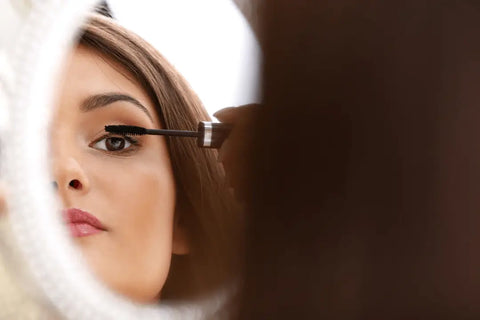
After giving birth, the mother often becomes so focused on the baby that she puts herself in the background. Her needs come second, her body becomes purely functional, her personal time disappears, and her identity as a woman may seem to fade behind that of a mother.
Meanwhile, the partner may also feel displaced, powerless, or unsure how to help. They want to help but don’t always know how. They may feel they’re getting in the way, wait to be told what to do, or, on the contrary, act clumsily. This is often where frustrations begin.
The postpartum period calls for a real rebalancing. Not a theoretical division of responsibilities, but a concrete, visible, regular one. Couples need to redefine who does what, how, and when—and above all, avoid leaving the entire mental load to one person.
Preserving your identity beyond your role as a parent
I think it’s very important to keep some personal space, even if it’s small. Reading, going for a walk, seeing a friend, doing some gentle exercise, making a hairdresser’s appointment, spending an hour alone without looking after anyone: these things aren’t secondary. They’re what help you avoid completely losing yourself in the demands of parenthood.
Feeling alive outside of the baby also helps you reconnect with your partner in a different way. You feel less drained, less trapped, less reduced to a function. And that changes the relationship enormously.
You can also explore useful content about the body and intimacy through our pelvic floor guide or our vagina guide, which can help you better understand certain sensations or changes after giving birth.
The partner must be involved, not just “helpful”
There is a real difference between helping and doing your share. Helping implies that primary responsibility remains with the other person. Doing your share means being fully involved in care, decisions, organization, and the unexpected.
When each person genuinely carries part of the daily load, the relationship breathes more easily. The fatigue is still there, of course, but it feels less unfair. Above all, this reduces the silent resentment that is one of the major pitfalls of the postpartum period.
Tensions and frustrations: how to prevent fatigue from turning into a cold war

New responsibilities, lack of time, mental load, and differences in pace very often create tension. This is not a sign of failure. It is a logical consequence of a demanding, ongoing transition.
The problem arises when frustrations build up without being expressed. We let one remark slide, then another, and then yet another. One day, a small spark is enough to trigger a huge argument that is no longer just about the issue at hand, but about everything that has piled up before.
Talking before you explode
I recommend not waiting until you are at breaking point to talk. There is no need for a long speech. Sometimes, one clear and calm sentence is enough: “I’m overwhelmed”, “I need you to take over”, “I feel alone”, “I feel like everything is resting on me”.
The sooner you put things into words, the less time anger has to build. And during the postpartum period, this emotional prevention is worth its weight in gold.
Putting visible solutions in place
Misunderstandings decrease when organization becomes concrete. Routines, calendars, lists of essentials, taking over during certain time slots, meal preparation, dividing up laundry, baths, and appointments: anything that reduces uncertainty also reduces tension.
A couple does not need to be perfect. It needs to have points of support. This is often what helps maintain a more stable atmosphere despite fatigue.
Accepting body changes: developing a gentler view of yourself

The body after childbirth can become a source of discomfort. Weight gain, a changed stomach, a different chest, stretch marks, a feeling of looseness, fatigue showing on the face, and a loss of familiar reference points. Many women feel they no longer recognize either their figure or their image.
The issue is that this real vulnerability is often compounded by the pressure of social media. There, we see bodies restored in just a few weeks, polished, smiling, filtered scenes, whereas real postpartum life is often much rawer.
Comparing yourself to others during this period can be extremely painful. Your body hasn’t “failed” at anything. It has carried, created, endured, and is still recovering. It deserves a fairer perspective.
Regaining confidence without being hard on yourself
I don’t believe in being told to love yourself at all costs overnight. However, I do believe in making small shifts in the way you see yourself. Speaking to yourself with a little more kindness. Stopping yourself from reducing who you are to what you dislike. Acknowledging what your body has been through.
If you feel self-conscious, it’s better to adopt realistic habits: a more balanced diet, physical activity adapted to your needs after pelvic floor rehabilitation, rest whenever possible, clothes you feel comfortable in, and above all, no harsh restrictions.
For some women, reconnecting with their femininity also involves simple details: putting on a little makeup, changing outfits, wearing beautiful lingerie again, taking care of their skin, and seeing themselves as more than just a machine that keeps going. This can help—not to meet a standard, but to reconnect with a part of themselves.
If you’d like to explore this gently, you can browse our selections of lingerie or intimate hygiene products to reconnect with your body more comfortably.
Scars, stretch marks, and body image: coming to terms with what has changed

Scars and stretch marks are common signs of the postpartum period. For some, they fade almost into the background. For others, they become a painful fixation. There is no right way to experience them.
What matters is not minimizing what you’re feeling. Yes, these marks tell a powerful story. Yes, they can also be difficult to accept. Both realities can coexist.
I find it helpful to gradually change the way you look at them. Not as “flaws” that appeared out of nowhere, but as real traces of a body that has gone through a major event. This doesn’t erase the insecurity, but it can help ease the harshness of self-judgment a little.
When asking for help is a good idea
If these physical changes are weighing heavily on your mood, you can talk to a doctor, midwife, dermatologist, or psychologist. Sometimes there are treatment options, but it can also simply provide a space to share what you’re going through.
Most importantly, don’t stay alone with silent shame. The postpartum period is already challenging. There’s no need to add further inner loneliness to it.
Pelvic floor rehabilitation: a key step for comfort, your body, and intimacy

Pelvic floor rehabilitation is an important part of the postpartum period, particularly after a vaginal delivery. The pelvic floor may have been stretched, weakened, or less toned, which can lead to urinary leakage, a feeling of looseness, or certain discomforts in everyday life.
The goal isn’t only muscular. It’s also about regaining sensation, support, comfort, and greater confidence in your body. This is a useful foundation before resuming certain physical activities, but also before bringing more ease back into intimacy.
You can start by reading our article on pelvic floor rehabilitation as well as our content about yoni eggs and the pelvic floor to explore the subject further.
How to approach it in practice
Ideally, consult a healthcare professional trained in pelvic floor rehabilitation. A midwife, physical therapist, gynecologist, or doctor, depending on the situation—the important thing is to receive support suited to your needs.
Some women later use, with professional advice, suitable accessories such as geisha balls or also consult our pelvic floor guide to better understand anatomy and best practices.
Consistency matters more than rushing. It’s not about “fixing things quickly,” but about recovering properly.
Intimacy and sexuality after having a baby: reconnecting without pressure
The return to intimacy during the postpartum period never follows a straight line. Some people are afraid of being in pain, others feel no desire for a while, and still others mainly need reassurance about their bodies. All of this can coexist within the same couple.
It’s important to move away from the idea that there is a universal “right amount of time” before resuming a sex life. The pace depends on physical recovery, sleep, the emotional context, the pelvic floor, the type of delivery, breastfeeding in some cases, and quite simply your genuine desire.
Resuming intimacy doesn’t necessarily mean having full intercourse again right away. It can start with contact, caresses, tenderness, and time together without an objective. This gradual approach helps restore a sense of safety and desire where fatigue has overwhelmed everything.
Simple aids can provide relief
After giving birth, vaginal dryness or discomfort may be more noticeable, particularly depending on hormonal changes. In these cases, using a water-based lubricant can help restore greater comfort.
Some people also prefer to reexplore their bodies alone before returning to intimacy as a couple. This can sometimes be a soothing step. To do so, you can take a look at categories such as women’s stimulation or read our article dare to have sex during pregnancy, which also helps you think about intimacy differently, without a rigid framework.
The most important thing during the postpartum period is to take away the pressure to perform. A couple has nothing to prove. It simply needs to reconnect in a body and a life that have changed.
Protecting your relationship during the postpartum period: what really matters
The postpartum period puts a relationship to the test, but it can also reveal great relational strength when you choose to truly talk to each other, help one another without keeping score, and respect each other’s boundaries.
Protecting your relationship doesn’t mean avoiding every conflict. It means staying on the same team despite the fatigue. Continuing to treat each other as partners. Not letting resentment take up all the space. And remembering that behind the diapers, night wakings, and too-short days, there are still two people who need to be seen, heard, and supported.
If you’re going through this period and sometimes feel like you’re not managing, take a moment to breathe. Postpartum isn’t about perfection. You get through it one step at a time. With difficult moments, setbacks, adjustments, but also many things that can be rebuilt if kindness remains the foundation.
Your relationship doesn’t need to be perfect after having a baby. It needs space, time, tenderness, and honesty.

By Alicia Deroussen — Adopt1Toy expertise at the service of your pleasure.
Explore the same topic
- The pregnancy guide: sexuality and well-being
- The couple’s guide: sexuality, connection, and lasting intimacy
- Protecting your sexual health after 30: our advice
Discover in the store: to reconnect with your body without pressure, intimate care, massage oils to reconnect with touch, and lingerie for the day when you feel like enjoying your body again.


0 comments